
Read: Genesis 1:1–5; Psalm 19:1–4; Hebrews 1:1–3
Watch: BibleProject: Elohim
What’s in a Name?
Sometimes Sharon will be talking to someone and refer to “Mark.” The other person will ask, “Who?” Sharon then catches herself and says, “Oh, Pastor Mark.” Immediately, the person realizes who she means. Titles and names clarify identity.
So, who is this God?
There are millions of lowercase “gods” in our world—just ask anyone from an animistic culture. Trying to name them all is nearly impossible. In English, at least in written form, we distinguish the one true God with a capital “G,” while all other “gods” are relegated to the lowercase (as they should be).
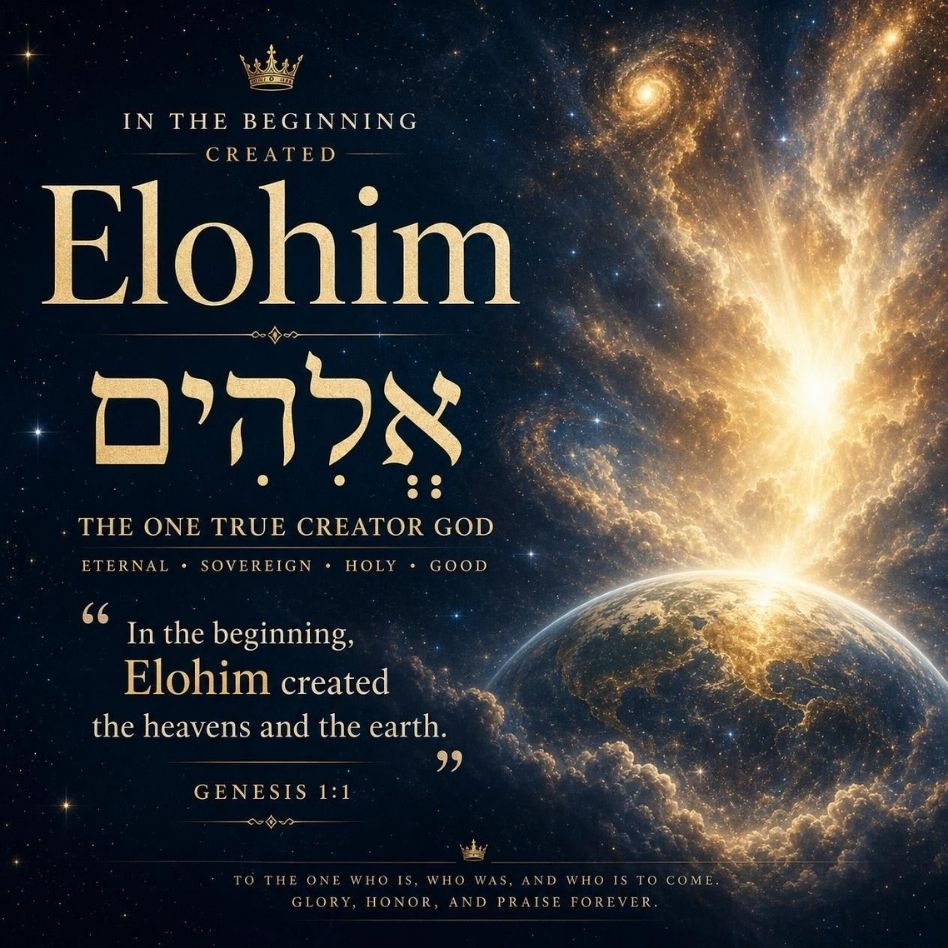
“In the beginning, Elohim…”
The Holy Bible begins with these foundational words. This single title—Elohim—occurs approximately 2,598 times in the Hebrew Scriptures, spanning every major section (Torah, Prophets, and Wisdom literature), including over 200 times in Genesis and 260 times in Psalms. One could easily say, “This Book is all about God!” God’s self-revelation to His creation hinges on this one weighty name.
Elohim: The Supreme Creator
While standard terms for “god” exist in Hebrew (most often El), Elohim specifically refers to the Supreme God, the One True God. The plural form of the name speaks to God’s supreme majesty and hints at His Trinitarian nature, yet Scripture affirms that “the Lord our God, the Lord is one” (Deuteronomy 6:4).
Elohim brings all things into being. Worship, morality, and purpose reside in Him and derive from Him. He is the covenant maker, the covenant keeper, and the righteous judge.
When Elohim is combined with descriptive modifiers, it reveals specific attributes of His character:
- Elohim Tsevaot – God of Hosts (Psalm 80:19): Commander of the heavenly armies.
- Elohim Elyon – God Most High (Genesis 14:20): Supreme over all creation.
- Elohim Olam – The Everlasting God (Genesis 21:33): Timeless and eternal in being.
- Elohim Yisrael – God of Israel (Psalm 68:35): Covenantally tied to His people.
Throughout Scripture, Elohim paints a complete picture of God as our Creator, Redeemer, and Judge—the ultimate object of our worship as we learn to trust and obey Him alone.
So, What Does This Mean to Me?
The core message of Elohim is this: God is our strong, self-sufficient Creator who brings order out of chaos. Even before He spoke creation into being, God knew you.
This gives your life profound meaning. You were created in the image and likeness of Elohim. You were intentionally designed with infinite worth to experience God’s good creation and to deeply know His love.
That changes everything!
Pray: Creator God, my Father thank you for loving me before you made the world. Help me to experience you in all your fulness!
Discussion Questions:
- Order Out of Chaos
Elohim is the God who speaks light into darkness and brings order out of chaos (Genesis 1:1–5). Where in your life right now—whether in your heart, schedule, relationships, or mind—does it feel like chaos is taking over, and how can you invite Elohim to speak order into that area this week? - The Impact of Your Identity
Knowing that the Creator of the universe knew you before time began and intentionally designed you in His image gives you infinite worth. How does truly internalizing this truth change the way you view your daily self-worth, especially on days when you feel inadequate or overlooked? - Resting in His Titles
We looked at four specific names: Elohim Tsevaot (God of Hosts/Protector), Elohim Elyon (Most High/Sovereign), Elohim Olam (Everlasting/Unchanging), and Elohim Yisrael (Covenant Keeper). Which of these aspects of God’s character do you need to lean on most in your current season of life, and why? - Lowering the “gods” of Our Culture
The Weekly Word points out that while there are millions of lowercase “gods” in the world, Elohim stands alone as Supreme. What are some subtle, lowercase “gods” (e.g., control, approval, comfort, security) that compete for your worship or attention, and what practically helps you keep Elohim at the center?